No, avocado oil is not a seed oil. It is a fruit oil, extracted from the soft flesh (the mesocarp) of the avocado rather than from its large seed, much as olive oil comes from the flesh of the olive.
If you have been asking "is avocado oil a seed oil?" because of the debate about seed oils, this short guide explains where avocado oil comes from, why the difference matters for colour and flavour, how international food standards treat it, and what it means when you choose between grades.
What counts as a "seed oil"?
In everyday use, "seed oil" means a plant oil made from the seeds of a plant. Cleveland Clinic describes seed oils as plant-based cooking oils "made from … the seeds of various plants", and lists familiar examples such as canola (rapeseed), corn, cottonseed, grapeseed, soybean, sunflower, safflower, rice bran and peanut oil. Avocado oil is not on that list.
There is a lively public debate about seed oils. We are not taking sides in it here. This article simply answers the botanical question: which part of the plant does avocado oil come from?
Is avocado oil a seed oil? Where it comes from
An avocado has three main parts: the skin, the creamy flesh and the large seed (often called the stone or pit). The oil sits mainly in the flesh.
A 2016 review of avocado oil extraction in the Journal of Oleo Science describes avocado oil as the lipid extracted "from the mesocarp of the avocado fruit rather than the seed". The same review notes that the seed contains little oil, about 2%, and that most commercial avocado oil is extracted from the flesh.
So when people ask "is avocado oil a seed oil?", the short answer from the scientific literature is no: commercial avocado oil is a pulp, or fruit, oil.
A note on wording you may see
Not every document uses identical wording. A 2019 review in Molecules notes, for example, that one national standard describes crude avocado oil as obtained from "the pulp and the seed" of the fruit. That is why it helps to ask a supplier how their oil is defined. The general picture in the reviews is still clear: the flesh is where the oil is.
Avocado oil and olive oil: two fruit oils
Avocado oil and olive oil have something in common: both come from the flesh of a fruit, not from a seed. The similarity goes further than where the oil sits:
- The Journal of Oleo Science review notes that avocado oil has a high content of monounsaturated fatty acid (oleic acid, above 50%), "which is similar to olive oil".
- The Molecules review reports that, whatever the extraction method studied, the main fatty acids in avocado oils were oleic and palmitic acids.
- The same review notes that, because avocado oil has fewer international rules of its own, values recommended for olive oil are often used as reference points when assessing its quality.
This is one reason avocado oil is often discussed alongside olive oil rather than alongside the seed oils listed above. If you are choosing between the two in the kitchen, our guide on avocado oil vs olive oil compares them side by side.
How food standards treat avocado oil
International food standards now name avocado oil specifically. In November 2024, the FAO/WHO Codex Alimentarius Commission agreed to include avocado oil in the Standard for Named Vegetable Oils (CXS 210-1999). That standard sets out the identity and quality expectations for named vegetable oils traded internationally.
For buyers, this matters because it gives a shared reference point when you write specifications and compare suppliers, alongside the requirements of the country you import into.
Seed oil or fruit oil: a quick comparison
| Typical seed oils | Avocado oil | |
|---|---|---|
| Part of the plant | Seeds (for example sunflower, soybean, rapeseed) | Fruit flesh (mesocarp) |
| Closest "family" | Other seed oils | Other fruit-pulp oils, such as olive oil |
| Main fatty acid | Varies by seed | Oleic acid (a monounsaturated fat) |
| Colour of unrefined oil | Varies by seed | Often green, from chlorophyll in the flesh |
| Named in Codex CXS 210-1999 | Many are | Yes, since November 2024 |
What "from the flesh" means for colour and flavour
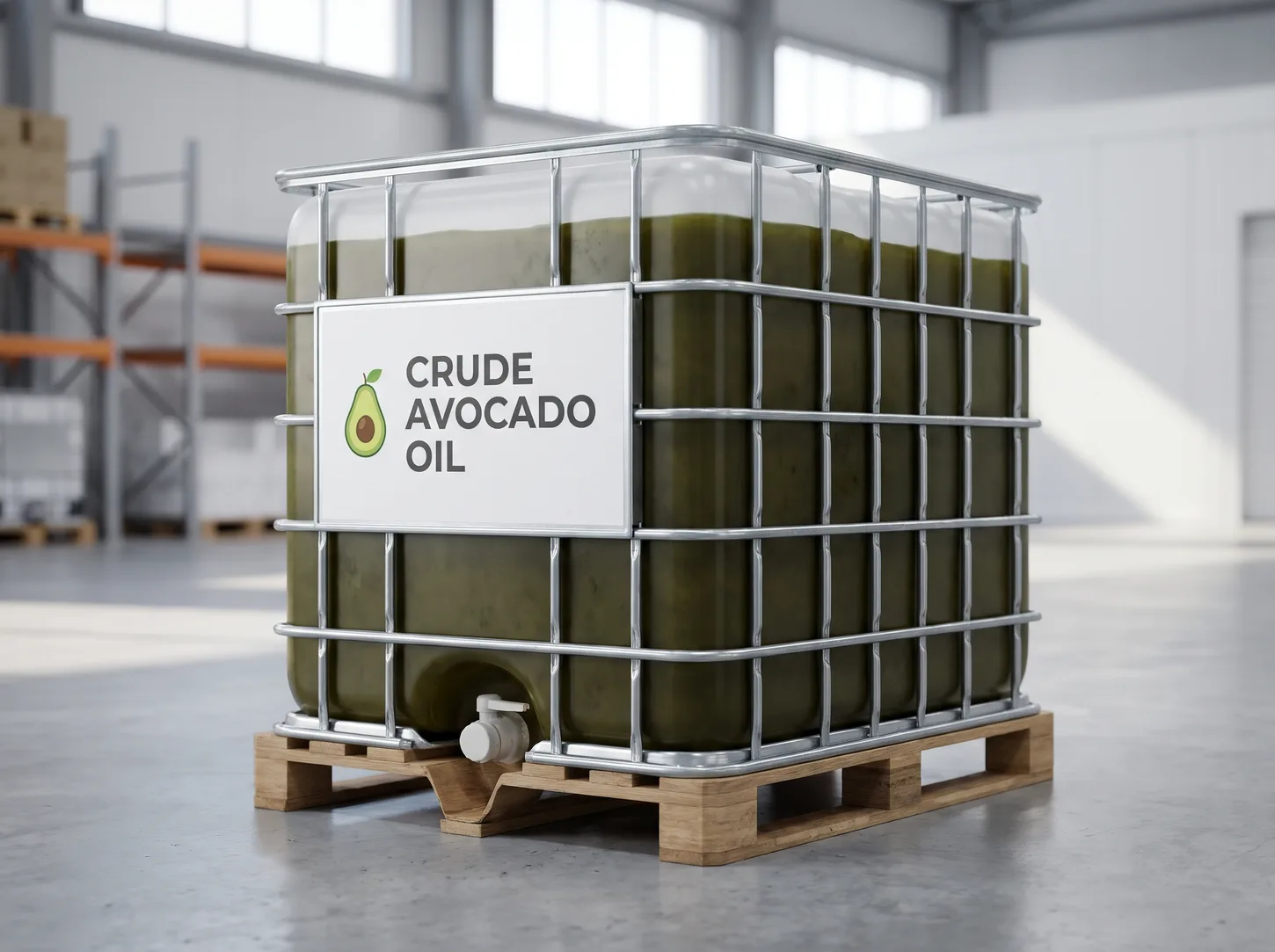
Because the oil comes from the green flesh of the fruit, it carries some of the fruit's natural pigments. The Journal of Oleo Science review notes a high concentration of chlorophylls in virgin or crude avocado oil, which gives it an emerald-green appearance.
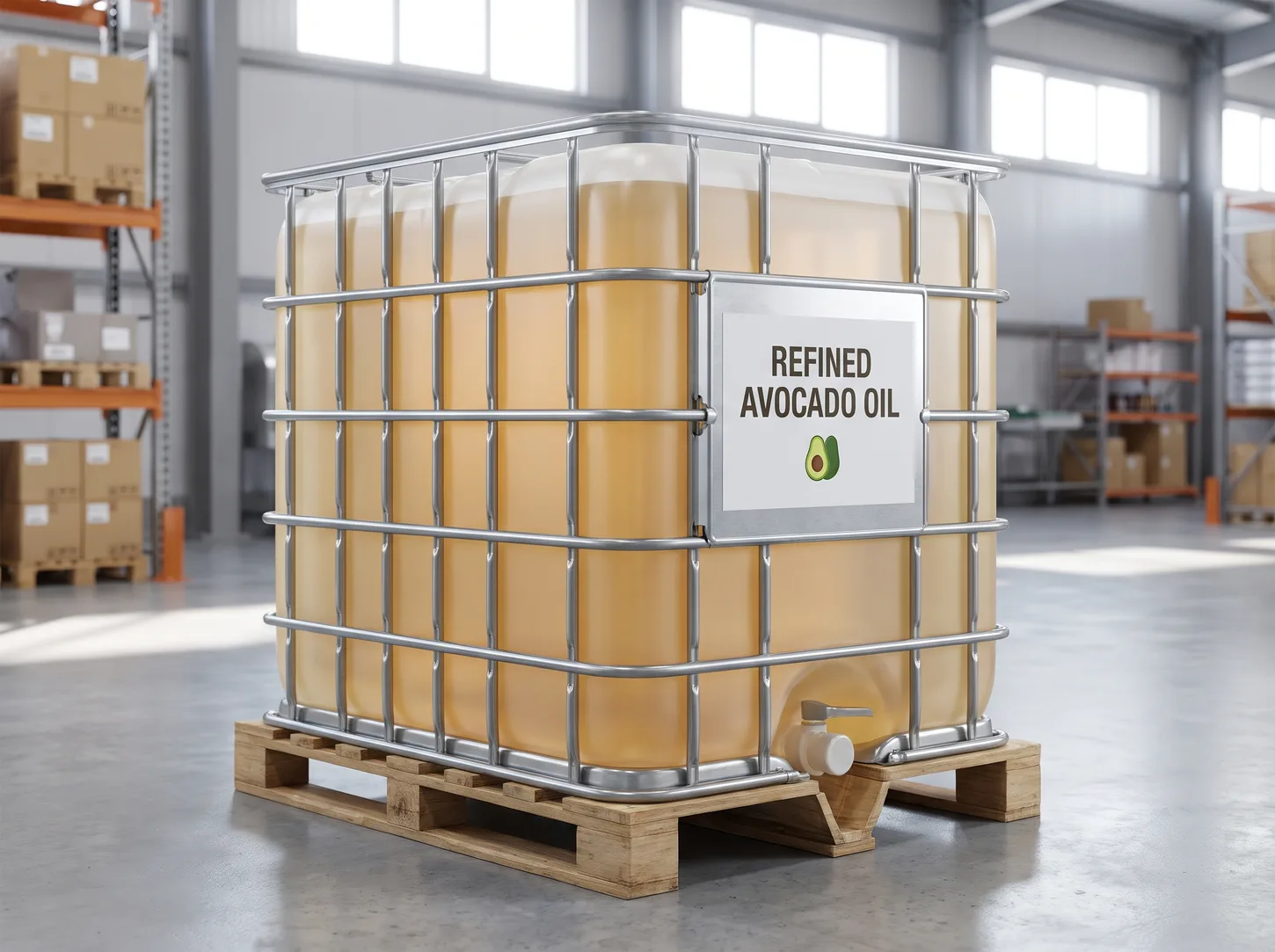
Refining changes this. The Molecules review describes refined avocado oil as an oil that has been bleached and deodorised. Refined avocado oil is therefore usually pale in colour and mild in flavour, while unrefined grades keep more of the fruit's colour and taste. We explain this in more detail in why some avocado oil is green and some pale.
In practice:
- Extra virgin avocado oil keeps more of the fruit's colour and flavour, which suits dressings, dips and finishing dishes.
- Refined avocado oil is lighter in colour and neutral in taste, which suits everyday cooking and recipes where you don't want the oil to stand out.
- Crude avocado oil is the unrefined starting point for further processing.
None of these grades becomes a seed oil. Refining changes the colour, flavour and some components of the oil, but not the part of the fruit the oil came from.
A quick checklist for buyers
If "not a seed oil" matters to your customers, a few simple questions help you buy with confidence:
- Which grade is it? Crude, refined, extra virgin or organic.
- How is the product defined? Ask whether the oil is from the fruit flesh and how the supplier describes it.
- Which standard applies? Codex CXS 210-1999 now names avocado oil; your import market may have its own rules too.
- Is the label accurate? Describe the oil plainly as avocado oil and the grade it is, without overstated claims.
How Imara can help
We are Imara Avocado Factory in Thika, Kenya. We make crude, refined, extra virgin and organic avocado oil, and our organic oil is certified. We refine our oil ourselves, in our own refinery in Thika.
You can buy our oil in three ways:
- Wholesale, under the Imara brand, from 5 pieces.
- Private label, in 250 ml, 500 ml and 1 L, bottle or spray, from 100 bottles per SKU.
- Bulk, from one container (23 t, one flexitank).
We hold an AFA export licence (Kenya) and China GACC registration. To discuss grades for your product, see our refined avocado oil and extra virgin avocado oil pages, or contact our team.
FAQ
Is avocado oil a seed oil?
No. Avocado oil is extracted from the flesh (mesocarp) of the avocado fruit, not from its seed, so it is a fruit oil, like olive oil.
Is avocado oil made from the avocado pit?
Commercial avocado oil comes mainly from the flesh. A scientific review notes the seed contains only about 2% oil, and that most commercial avocado oil is extracted from the flesh.
Does refining turn avocado oil into a seed oil?
No. Refining (including bleaching and deodorising) changes the oil's colour and flavour, but the oil still comes from the fruit flesh.
Is avocado oil similar to olive oil?
In some important ways, yes. Both come from fruit flesh, and both are rich in oleic acid, a monounsaturated fat.
Is avocado oil recognised in international food standards?
Yes. In November 2024 the Codex Alimentarius Commission agreed to include avocado oil in the Standard for Named Vegetable Oils (CXS 210-1999).
Sources
- Qin, X. and Zhong, J. (2016). A Review of Extraction Techniques for Avocado Oil. Journal of Oleo Science, 65(11), 881–888. https://www.jstage.jst.go.jp/article/jos/65/11/65_ess16063/_html/-char/en
- Flores, M., Saravia, C., Vergara, C.E., Avila, F., Valdés, H. and Ortiz-Viedma, J. (2019). Avocado Oil: Characteristics, Properties, and Applications. Molecules, 24(11), 2172. https://www.mdpi.com/1420-3049/24/11/2172
- World Health Organization (2024). Forty-seventh session of the FAO/WHO Codex Alimentarius Commission adopts new standards. https://www.who.int/news-room/events/detail/2024/11/25/default-calendar/47th-session-of-the-FAO-WHO-Codex-Alimentarius-Commission-adopts-new-standards
- Cleveland Clinic (2025). Seed Oils: Are They Actually Toxic? https://health.clevelandclinic.org/seed-oils-are-they-actually-toxic
Explore all avocado oil products · Crude avocado oil · Refined avocado oil.