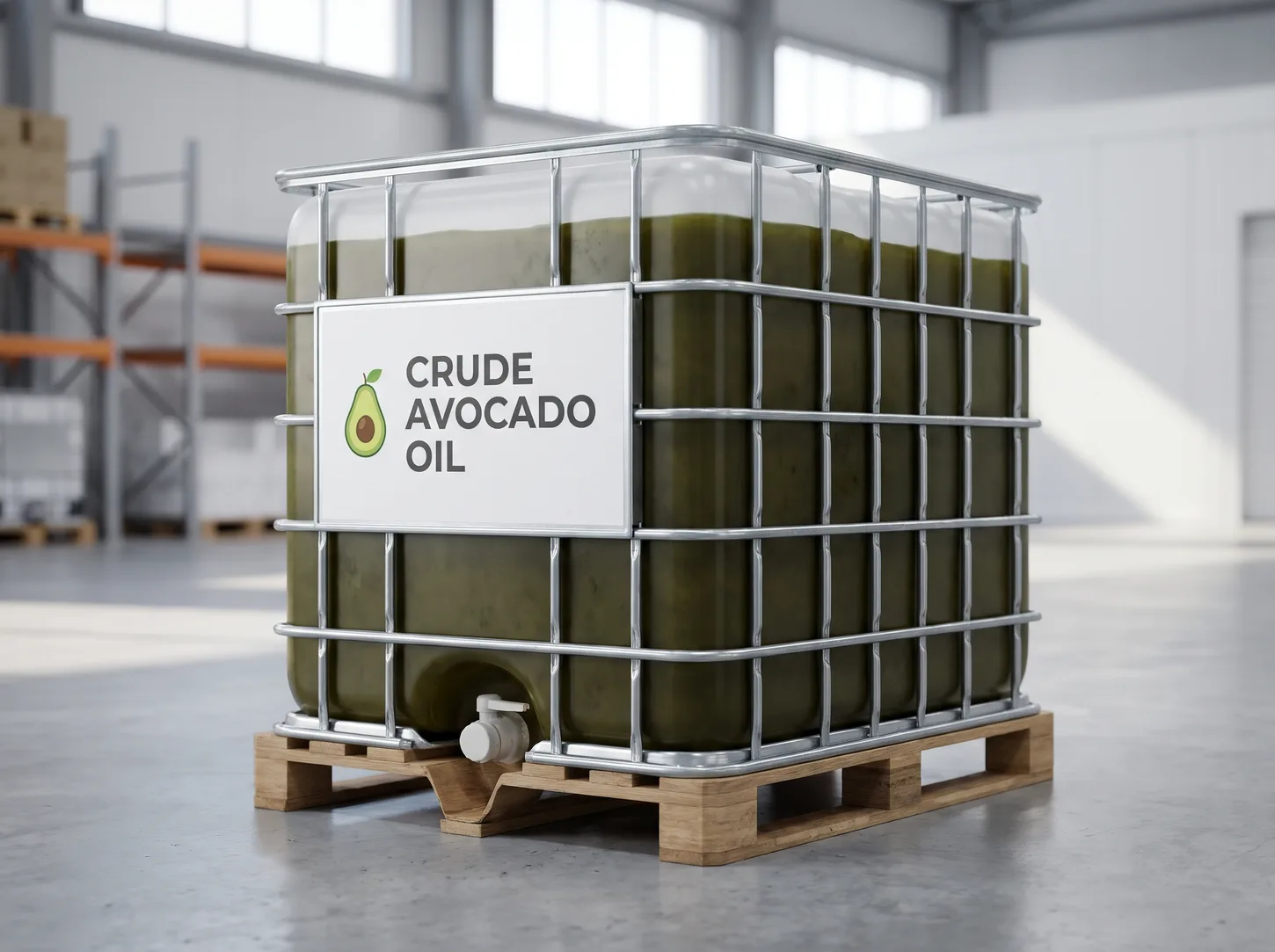
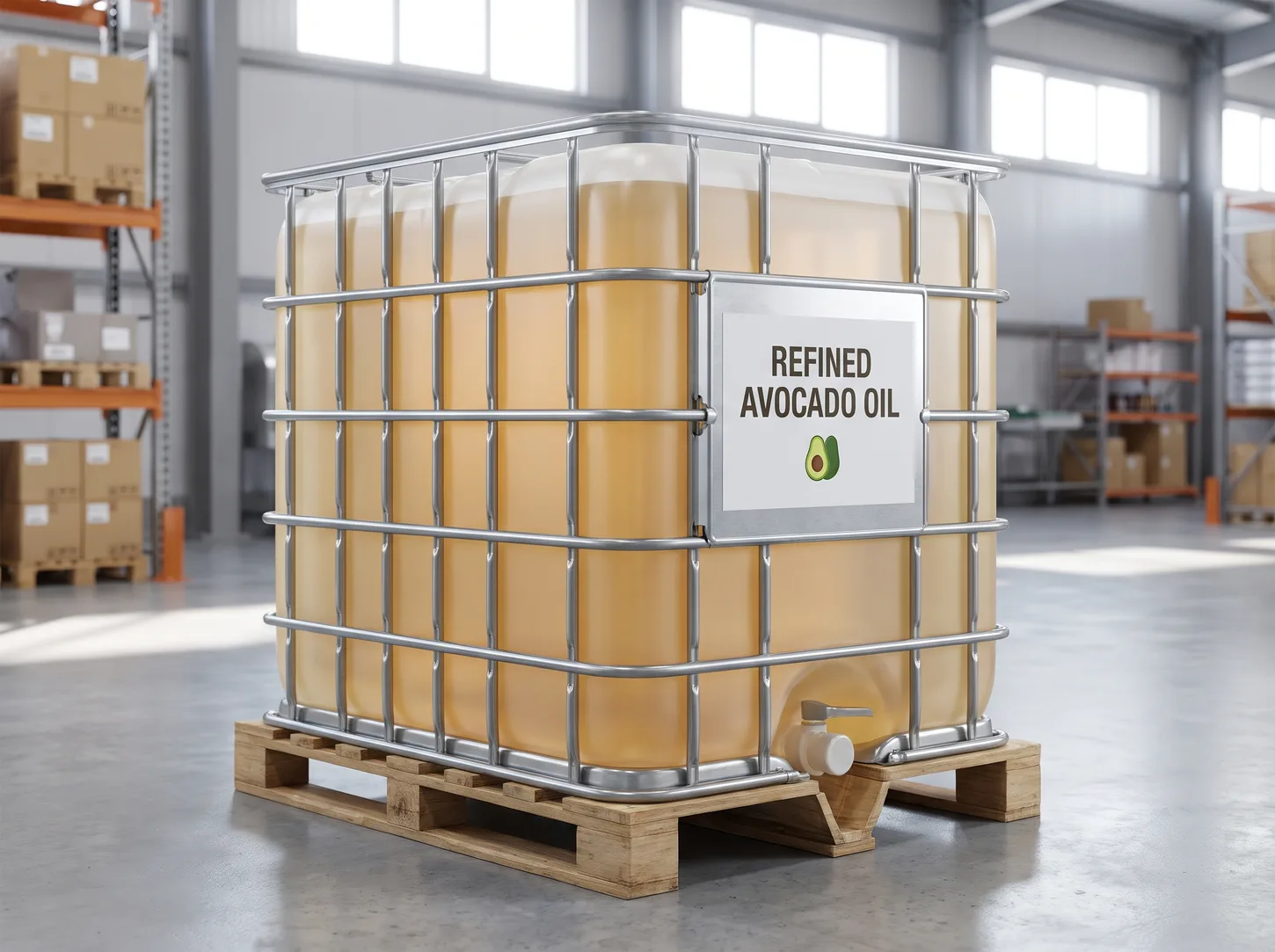
The quickest way to tell whether avocado oil is pure is to check its colour, smell and taste against its grade, then buy fresh, well-stored bottles from a supplier who can explain where the oil comes from. For bulk and private label buyers, the only sure answer is a laboratory test, using the international Codex reference for refined avocado oil where it applies.
Pure avocado oil matters because independent testing has found many products falling short. In a 2020 University of California, Davis study of 22 avocado oil samples, at least 82% were either stale before their expiration date or mixed with other oils. A 2023 follow-up by the same team tested 36 private label avocado oils from 19 retailers in the US and Canada and found that only 31% were pure. This guide explains what goes wrong, what you can check at home, and what a professional buyer should ask for.
What "pure avocado oil" should mean
Pure avocado oil is oil extracted from the avocado fruit, with nothing else added. It comes in different grades, and each grade looks and tastes different:
- Extra virgin or virgin avocado oil is unrefined. It is usually green, with a grassy, buttery taste.
- Refined avocado oil has been treated with heat or chemicals to remove flaws. It is light yellow, almost clear, and mild in taste.
- Crude avocado oil is the raw oil before refining, mostly used by refiners and manufacturers rather than cooks.
So a pale refined oil is not "fake" because it is not green. The question is whether the oil matches the grade on the label. If you want a fuller explanation of the grades, read our guide to refined vs unrefined avocado oil.
The two common problems: rancid oil and mixed oil
The UC Davis studies point to two separate problems.
1. Oxidised (rancid) oil
All oils oxidise over time, and faster when exposed to light, heat or air. In the 2020 study, 15 of the 22 samples were already oxidised before their expiration date. Rancid oil is not what you paid for: it loses its fresh flavour and quality.
2. Oil mixed with cheaper oils
In the same study, six samples were mixed with large amounts of other oils, such as sunflower, safflower and soybean oil. In three cases, bottles labelled "pure" or "extra virgin" contained nearly 100% soybean oil. A more recent study led by the same UC Davis researcher, published in Applied Food Research and reported in September 2026, found that 48 of 54 processed foods labelled as made with 100% avocado oil, including chips, mayonnaise and dressings, contained other, cheaper oils.
Price alone does not protect you. The 2023 study found that lower-priced oils were more likely to be adulterated, but also that high cost did not guarantee purity or quality.
How to check pure avocado oil at home: a quick checklist
These checks will not prove that an oil is pure, but they help you spot a bad bottle.
| Check | What to look for | Warning sign |
|---|---|---|
| Colour | Extra virgin: green. Refined: light yellow, almost clear | Colour that does not match the grade on the label |
| Smell | Fresh, mild or lightly grassy | A stale smell, which the UC Davis team compares to play dough |
| Taste (virgin oil) | Grassy, buttery, slightly like mushrooms | Flat, bitter or stale taste |
| Date | A recent harvest or production date | Only a far-off "best before" date, and nothing else |
| Bottle | Stored away from light and heat | Bottle kept under bright lights or near heat |
| Size | A size you will finish while it is fresh | A large bottle that will sit open for months |
UC Davis researchers also note that "best before" dates are not always reliable, so the closer the bottle is to its production date, the better. Once you open it, keep it in a cool, dark cupboard rather than beside the stove.
How professional buyers check purity
If you buy avocado oil in bulk, or put it under your own label, a smell test is not enough. Your brand carries the risk. Here is a practical checklist.
Use the Codex reference in your specification
Until recently there was no international identity standard for avocado oil. In November 2024, the FAO/WHO Codex Alimentarius Commission agreed to include avocado oil in the Standard for Named Vegetable Oils (CXS 210-1999). This gives buyers and sellers of refined avocado oil a shared composition reference for the first time. It covers factors such as the fatty acid profile, oleic acid content, free fatty acid content, sterols and tocopherols. Standards for virgin and extra virgin avocado oil were still being discussed at that time.
Writing the Codex criteria into your purchase specification gives both sides a clear benchmark.
Ask for laboratory results
Ask your supplier for a certificate of analysis for the lot you are buying, and consider sending a sample to an independent laboratory. Purity testing looks at the oil's chemical fingerprint, such as its fatty acid and sterol profile, to see whether other oils have been added. Freshness testing looks at markers of oxidation. Industry experts note that authentic avocado oil is free from trans fatty acids, one of the main indicators of purity.
Know where the oil comes from
Adulteration is easier when oil passes through many hands. Ask your supplier:
- Where are the avocados grown?
- Who presses the crude oil?
- Who refines it, and where?
- How is the oil stored and transported?
A supplier who controls more of these steps can answer clearly and trace a batch back to its source.
Taste and test the sample before you order
Ask for a sample of the same grade you plan to buy. Check it against your specification before you commit to a full order, and test again when the shipment arrives.
How Imara can help
At Imara Avocado Factory in Thika, Kenya, we make crude, refined, extra virgin and organic avocado oil. We source our avocados ourselves, from our own farms and partner farms. We make most of our crude oil ourselves, especially for specialised orders, and we refine it ourselves in our own refinery in Thika. We also transport it ourselves, in our own ISO tanks. That means we can answer clearly when you ask where your oil came from.
We hold an AFA export licence (Kenya) and China GACC registration, and we are organic certified. We sell in bulk (from one container, 23 t in one flexitank), wholesale, and as private label in 250 ml, 500 ml and 1 L, bottle or spray, from 100 bottles per SKU.
See our refined avocado oil and extra virgin avocado oil pages, or ask about wholesale and bulk orders. You can also email us at support@imaraavocados.com.
Frequently asked questions
How can I tell if avocado oil is pure at home?
Check that the colour matches the grade (green for extra virgin, light yellow for refined), smell it for staleness, and check for a recent production date. Only a laboratory test can confirm purity.
Why is my avocado oil yellow and not green?
It is probably refined. Refined avocado oil is light yellow and almost clear. That is normal, as long as the label says refined.
Is there an official standard for pure avocado oil?
Yes, for refined oil. In 2024 the Codex Alimentarius Commission added avocado oil to its Standard for Named Vegetable Oils (CXS 210-1999). It is an international reference that buyers can use in their specifications. At that time, standards for virgin and extra virgin avocado oil were still under discussion.
Does a higher price mean the oil is pure?
Not always. Cheaper oils were more likely to be adulterated in one study, but high cost did not guarantee purity or quality.
What does rancid avocado oil smell like?
UC Davis researchers describe rancid avocado oil as smelling stale, a bit like play dough.
Sources
- University of California, Davis (2020). "Study finds 82 percent of avocado oil rancid or mixed with other oils" (summary of Green and Wang, Food Control, 2020). https://www.ucdavis.edu/food/news/study-finds-82-percent-avocado-oil-rancid-or-mixed-other-oils
- Phys.org (2023). Summary of Green and Wang, Food Control (2023), doi:10.1016/j.foodcont.2023.109837. https://phys.org/news/2023-05-private-avocado-oil-rancid-oils.html
- World Health Organization (2024). 47th session of the FAO/WHO Codex Alimentarius Commission adopts new standards. https://www.who.int/news-room/events/detail/2024/11/25/default-calendar/47th-session-of-the-FAO-WHO-Codex-Alimentarius-Commission-adopts-new-standards
- The Shelby Report (2024). Codex essentials: keeping up with changing avocado oil standards. https://theshelbyreport.com/2024/11/15/codex-essentials-keeping-up-with-changing-avocado-oil-standards
- Fresh Fruit Portal (2026). AOMA calls to strengthen avocado oil authenticity standards following UC Davis study. https://www.freshfruitportal.com/news/2026/09/23/aoma-avocado-study/
- SupplySide Food & Beverage Journal. Experts advise on how to avoid avocado oil fraud. https://www.supplysidefbj.com/food-ingredients/experts-advise-on-how-to-avoid-avocado-oil-fraud