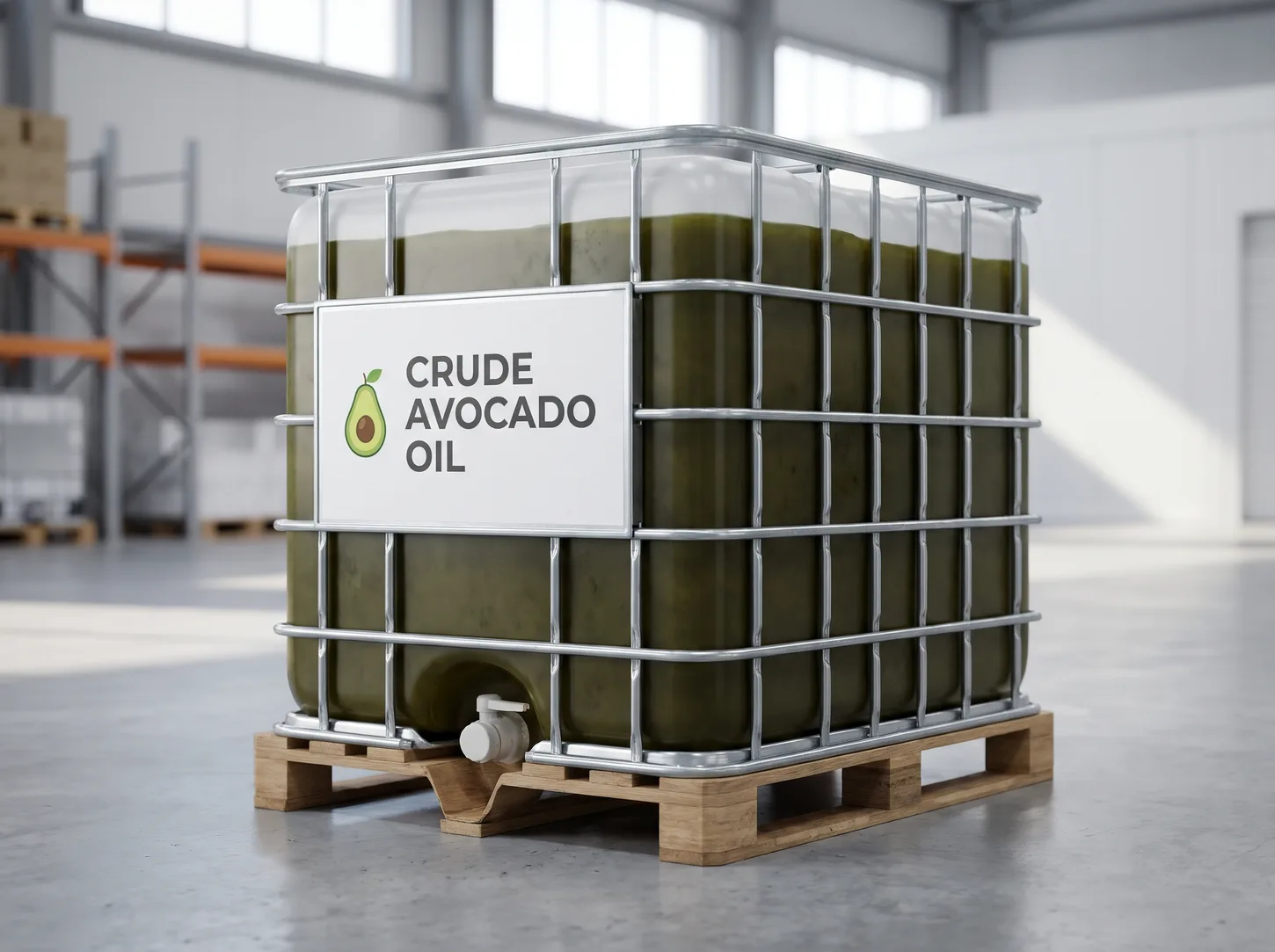
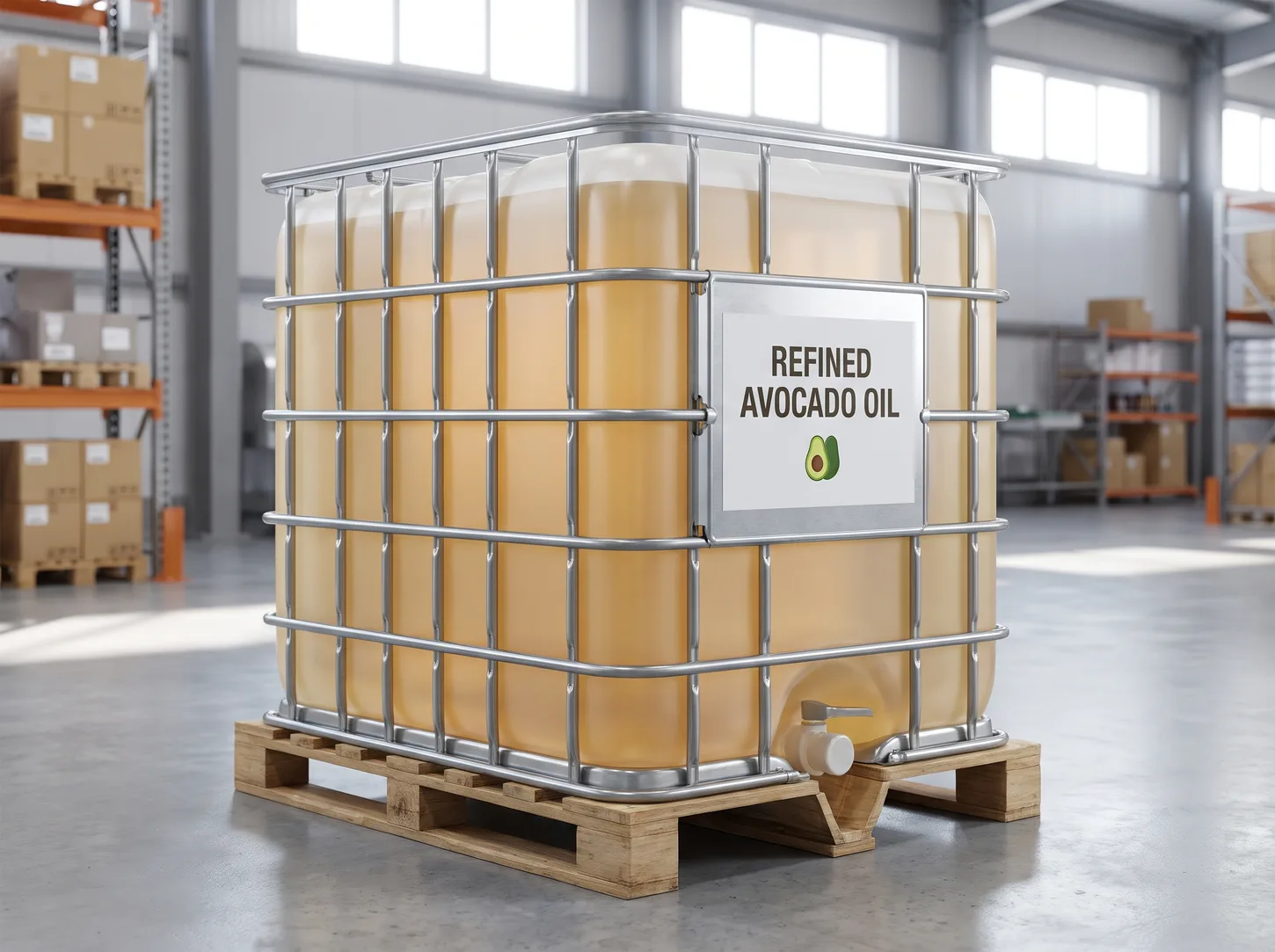
For most new private label avocado oil brands, the right first bottle is the size your customer will finish while the oil is still fresh, in a format that keeps light out: 250 ml or 500 ml for premium extra virgin and cosmetic oils, 1 L for everyday cooking oil used quickly. Choose a pour bottle for kitchen use and a spray where people want a thin, even layer, such as on a pan, salad, skin or hair.
That is the short answer. Below, our team explains how to match bottle size and format to your product, your buyer and your market, so your private label avocado oil reaches shelves in good shape and sells through.
Why bottle size matters more than it looks
Avocado oil, like every edible oil, slowly oxidises once it meets light, heat and air. Food scientists at NDSU Extension put it simply: "Exposure to light, warm temperatures and oxygen can promote the rancidity process." The same guide notes that unopened oil usually keeps for about one to two years, while opened oil lasts "anywhere from a few months to a year", and advises buying what you will use "in a reasonable amount of time".
For a brand owner, that has a clear consequence. Every time your customer opens the bottle, air comes in. A bottle that sits half-full for many months gives the oil more time to lose its fresh taste. The best bottle size is therefore not the cheapest per litre; it is the one your customer will finish while the oil still tastes the way you want your brand to taste.
Choosing a size: 250 ml, 500 ml or 1 L
Here is how we think about the three sizes we fill.
| Size | Best suited to | Typical buyer | Points to weigh |
|---|---|---|---|
| 250 ml | Extra virgin, organic and cosmetic oils; gift and trial packs | First-time buyers, premium shelves, beauty and wellness shops | Finished quickly, so the oil stays fresh; lowest entry price for shoppers; higher packaging cost per litre |
| 500 ml | Extra virgin or refined oil for regular home cooking | Households that cook with avocado oil a few times a week | A balanced middle size; fits most kitchen cupboards and retail shelves |
| 1 L | Refined oil for daily cooking; food service and busy kitchens | Families who cook with it daily, restaurants, caterers | Best value per litre; only a good choice when the bottle will be used up within a few months of opening |
A few practical rules help:
- Match size to grade. Extra virgin oil is prized for its flavour and colour, so smaller bottles protect what your customer is paying for. Refined oil has a milder taste and is used in larger amounts, so 1 L makes sense. Not sure which grade fits your brand? Our guide to refined vs unrefined avocado oil explains the differences.
- Match size to your channel. Think about where your oil will be sold: a 500 ml bottle can work as a core size for home cooks, a 250 ml bottle for beauty, gift or trial shelves, and 1 L for kitchens that cook in volume.
- Start with one or two sizes. A focused range is easier to launch and to restock. You can add sizes once you see what sells.
Choosing a format: pour bottle or spray?
Both formats have a clear place in a private label avocado oil range.
Pour bottle
A pour bottle is the classic choice for cooking oil. It suits frying, roasting, baking and dressings, where cooks measure oil by the spoonful or pour it straight into the pan. It is also the format most shoppers expect to see on a cooking oil shelf.
Spray
A spray puts a fine, even layer of oil exactly where it is needed. In the kitchen, that means lightly coating a pan, a tray of vegetables or a salad. In skin and hair care, a spray makes it easy to apply a small amount of oil to the body or the lengths of the hair.
A simple way to decide: if your customer will use the oil mostly by the tablespoon, choose a pour bottle. If they want a thin coat, choose a spray. You can also offer both: a 500 ml or 1 L pour bottle for cooking and a 250 ml spray for light use or cosmetic lines.
Protect the oil: light, heat and air
Whatever size you choose, the container should shield the oil from light. Two studies on olive oil show why:
- A 2019 study in Food Science and Technology Research stored extra virgin olive oil in sunlight for five weeks. Oil in clear glass bottles deteriorated most, while oil in bottles covered with foil showed no deterioration. The author concluded that "low transparency packaging provides protection against sunlight-induced oxidative deterioration".
- A 2018 study in the Journal of Food Science and Technology found that brown containers, both glass and PET, slowed peroxide formation under light compared with clear ones, and described brown glass as a barrier to both light and oxygen.
These studies were on olive oil, not avocado oil, but the principle carries over to edible oils generally: dark or tinted packaging, a tight closure and a cool storage place all help the oil keep its quality for longer. Add simple storage advice to your label, such as "Store in a cool, dark place. Close tightly after use."
Your private label avocado oil checklist
Before you sign off your bottle choice, run through this list:
- Grade: crude, refined, extra virgin or organic, and food or cosmetic use?
- Size: will your customer finish the bottle within a few months of opening?
- Format: pour bottle for cooking, spray for a thin, even layer?
- Light protection: is the container dark or tinted, or will it be kept in a box or carton?
- Label content: have you covered the mandatory items for your market?
- Volume per SKU: does your first order meet the minimum for each size and format?
On label content, the Codex General Standard for the Labelling of Prepackaged Foods is a useful starting point that many national rules build on. It asks for the name of the food, net contents declared in the metric system (by volume for liquid foods such as oil), the name and address of the manufacturer, packer or distributor, lot identification, a date of minimum durability ("Best before") and any special storage conditions the date depends on. Always check the specific rules in the country where you will sell.
How Imara can help
We are Imara Avocado Factory in Thika, Kenya. We make crude, refined, extra virgin and organic avocado oil, and we offer private label bottling in 250 ml, 500 ml and 1 L, as a bottle or a spray, with a minimum of 100 bottles per SKU. We source our avocados from our own farms and partner farms and refine in our own refinery in Thika. Orders ship EXW Thika, with FOB, CFR or CIF on request.
See our branding and bottling service, or contact our team to talk through the right grade, size and format for your brand.
FAQ
What is the minimum order for private label avocado oil at Imara?
Our minimum is 100 bottles per SKU, in 250 ml, 500 ml or 1 L, as a bottle or a spray.
Which bottle size sells best for a new avocado oil brand?
It depends on your channel and grade. A sensible start is 500 ml for cooking oil and 250 ml for extra virgin, organic or cosmetic oil, adding sizes once you see demand.
Is a spray suitable for cosmetic avocado oil?
It can be. A spray makes it easy to apply a small, even amount of oil to the skin or hair, which suits body and hair oils.
Does the bottle colour really matter?
Yes. Research on olive oil shows that clear bottles left in sunlight let the oil deteriorate faster than covered or tinted ones. Dark or tinted packaging, or an outer box, helps protect the oil.
What must go on a private label avocado oil label?
Rules vary by country, but the Codex labelling standard includes the food name, metric net contents, the name and address of the responsible business, a lot number, a best-before date and any storage conditions the date depends on. Check your local rules before printing.
Sources
- Kishimoto, N. (2019). Influence of Exposure to Sunlight on the Oxidative Deterioration of Extra Virgin Olive Oil during Storage in Glass Bottles. Food Science and Technology Research, 25(4), 539–544. https://www.jstage.jst.go.jp/article/fstr/25/4/25_539/_article
- Taoudiat, A., Djenane, D., Ferhat, Z. and Spigno, G. (2018). The effect of Laurus nobilis L. essential oil and different packaging systems on the photo-oxidative stability of Chemlal extra-virgin olive oil. Journal of Food Science and Technology, 55(10), 4212–4222. https://pmc.ncbi.nlm.nih.gov/articles/PMC6133871
- Codex Alimentarius. General Standard for the Labelling of Prepackaged Foods (CXS 1-1985). FAO/WHO. https://www.fao.org/3/y2770e/y2770e02.htm
- Garden-Robinson, J. (2017). Prairie Fare: Is It Time for an Oil Change in Your Kitchen? NDSU Extension, North Dakota State University. https://www.ag.ndsu.edu/news/columns/prairie-fare/prairie-fare-is-it-time-for-an-oil-change-in-your-kitchen