Smoke point is useful when choosing avocado oil, but it is not a complete cooking guide. A bottle intended for frying needs to suit the heat, flavour and handling involved; an oil bought for dressings may be chosen mainly for its taste. For commercial buyers, the product specification matters more than a headline temperature.
At Imara Avocado Factory in Thika, Kenya, refined and extra virgin avocado oils serve different purposes. Understanding how refining and free fatty acids affect the choice helps you buy for the dish or production process, rather than simply choosing the highest advertised smoke point.
What smoke point actually tells you
Smoke point is the temperature at which an oil begins to produce visible smoke under the conditions of a test. It is a useful warning threshold, not a recommended cooking temperature or a guarantee that the oil will perform identically in every kitchen.
An empty pan, a fryer containing food and an oven tray create different conditions. Moisture, food particles, previous use and the oil’s condition can also affect what happens during cooking. An oven setting is not necessarily the temperature of the oil on the food.
The practical rule is simple: do not deliberately heat oil until it smokes. Choose an oil suited to the task, control the heat and treat visible smoke as a reason to stop heating and reassess.
How refining and free fatty acids matter
Free fatty acids, usually shortened to FFA, are fatty acids that are no longer attached to the oil’s triglycerides. Their level is one indicator used to assess an oil’s condition and suitability for processing. Higher FFA can contribute to smoking at lower temperatures, but FFA alone does not determine cooking performance.
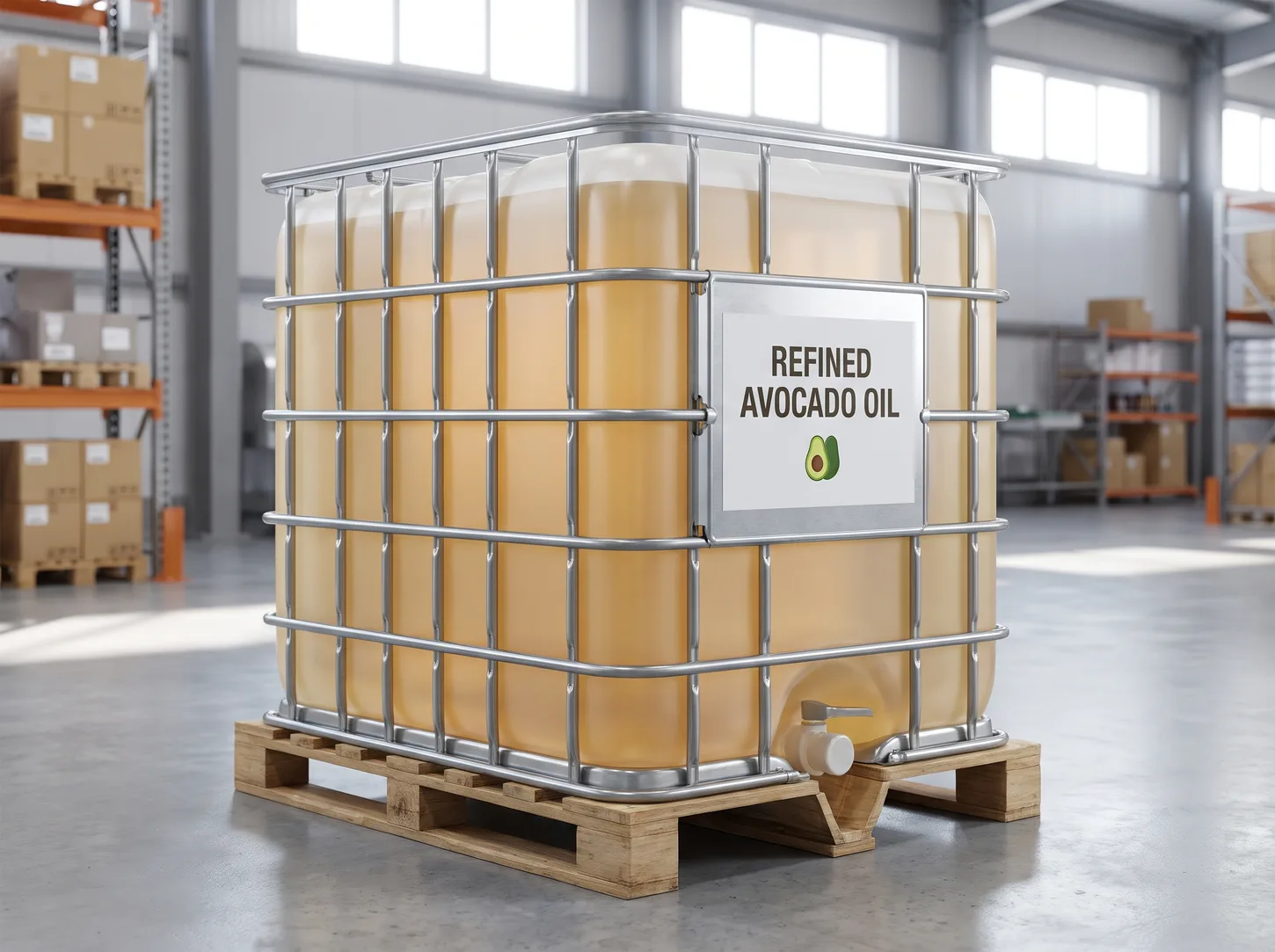
Refining reduces free fatty acids and other components to produce a more neutral oil. RBD means refined, bleached and deodorised. Imara has its own RBD refinery, alongside crude oil tanks and bottling facilities.
Imara’s crude and refined oils are produced through hot-pressed mechanical extraction without solvents. Its extra virgin oil is mechanically pressed and unrefined. These are distinct product categories, not interchangeable descriptions.
The FFA limits are:
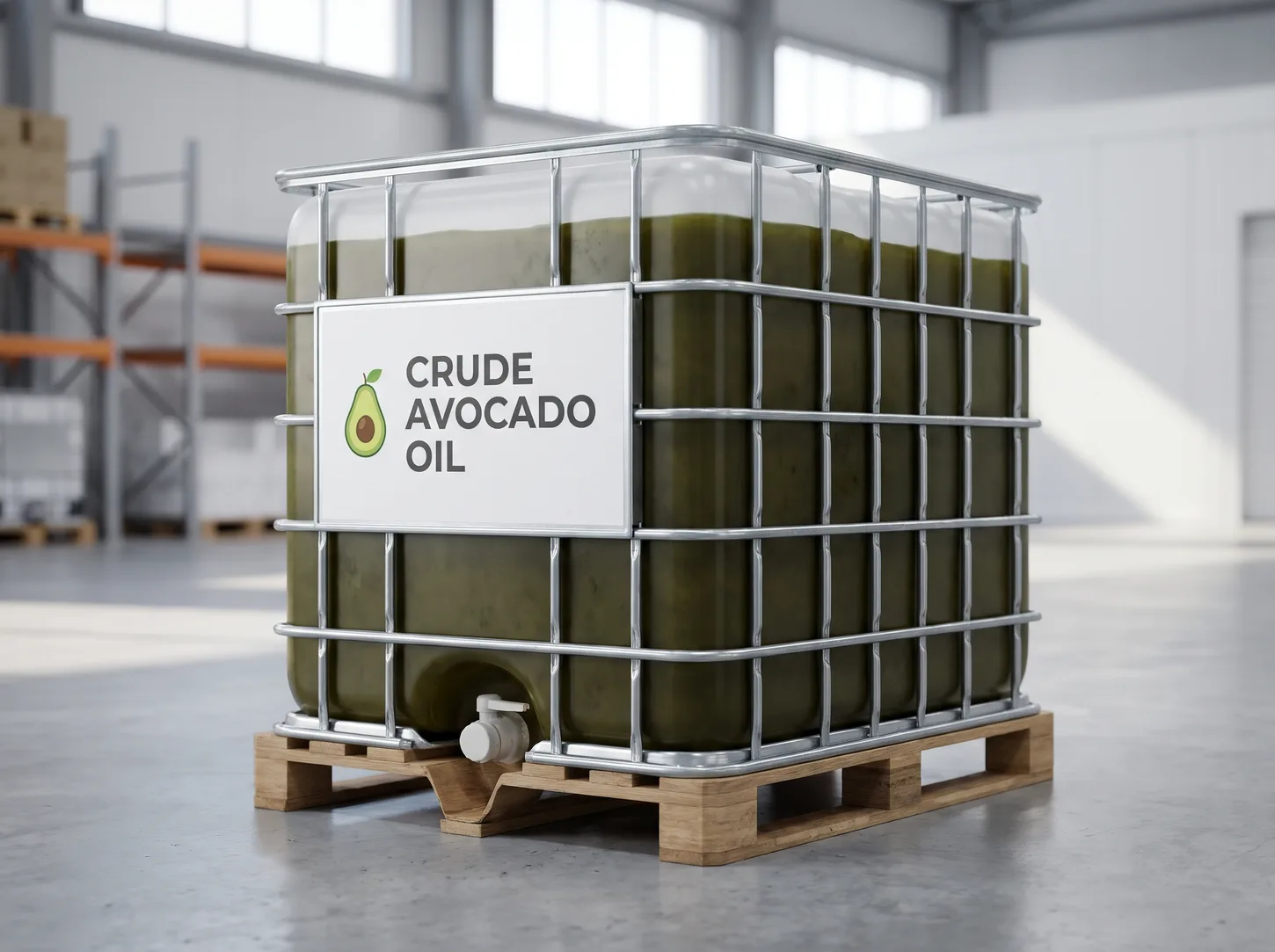
- Crude Hass avocado oil: no more than 5.0%.
- Refined avocado oil: no more than 0.1%.
- Extra virgin avocado oil: no more than 0.8%.
These are specification limits, not a statement that every lot sits exactly at the limit. Crude oil should not be treated as a substitute for finished cooking oil simply because it comes from the same fruit.
Refined and extra virgin smoke points compared
Imara’s typical smoke point guidance is about 250–270°C (482–518°F) for refined avocado oil and about 250°C (482°F) for extra virgin avocado oil. These are typical values, not specifications or guaranteed temperatures for every lot.
The overlap matters. It would be misleading to suggest that extra virgin avocado oil can only be used without heat, or that refined oil is always suitable for any cooking process. Flavour, the oil’s condition and the way it is heated remain important.
For buyers evaluating refined avocado oil, the lower FFA limit and neutral character are useful reasons to consider it for cooking. For extra virgin avocado oil, the unrefined character may be the deciding factor when avocado flavour is welcome.
If your purchasing specification requires a measured smoke point, raise that requirement before ordering. Do not convert a typical website value into a contractual acceptance limit without agreement.
Choosing oil for frying and everyday cooking
Refined avocado oil is a practical starting point for frying, sautéing and roasting where you want the ingredients and seasoning to lead. Its neutral character can be especially useful when the same oil must work across several dishes without adding a noticeable avocado flavour.
For shallow frying, use controlled heat rather than waiting for smoke to signal that the pan is ready. When roasting, consider the whole recipe: exposed seasoning or small pieces of food may scorch even when the oil itself has not reached its smoke point.
In a commercial fryer, a high initial smoke point does not justify indefinite reuse. Food residues, repeated heating and handling change the oil during service. Follow the equipment manufacturer’s instructions and your food safety procedures rather than relying on the temperature printed in marketing material.
The avocado cooking oil range is a useful place to begin when the buying question is everyday kitchen use rather than an industrial ingredient specification.
Choosing oil for dressings and finishing
Extra virgin avocado oil is worth considering when the oil is part of the flavour: a simple dressing, a dip, or a finishing drizzle over cooked vegetables. Taste it with the intended ingredients rather than judging it only on its own. Acidity, herbs and seasoning can change how prominent the oil seems.
Refined oil can also work in dressings. Choose it when you want mustard, citrus, vinegar or another ingredient to dominate. “Unrefined” is not automatically the better choice for every uncooked recipe; the right choice depends on the result you want.
For a menu or food product, compare both oils in the actual recipe before committing to a larger order. Imara offers a 250 ml sample for evaluation.
For advice on how oils fit your individual dietary needs, speak with a registered dietitian or another qualified healthcare professional.
What to check before placing an order
Start with the application, then choose the grade. The full product range helps distinguish cooking oils from crude, cosmetic and other purchasing categories. Tell the supplier whether you are buying for a kitchen, bottled retail product or food manufacturing process.
Ask for the relevant specification and check the FFA requirement against your intended use. Imara provides a certificate of analysis for every lot; the lot’s COA prevails at loading. A retained reference sample is kept, buyer inspection is welcome, and accredited contaminant laboratory tests are available on request.
For larger purchases, wholesale supply can be discussed alongside packaging and delivery terms. Keep technical acceptance criteria separate from logistics: a suitable container does not establish cooking performance, and a high smoke point does not establish that an oil meets every requirement in your formulation.
Protect the oil after purchase
Protect avocado oil from light, air and heat, and keep containers properly closed between uses. Avoid leaving cooking oil beside a hot appliance simply because it tolerates high temperatures during cooking.
Imara’s sealed product shelf life is 24 months. That is not a promise that opened or repeatedly heated oil will remain unchanged for the same period. Buy in a format that suits your usage and storage conditions.
For help comparing refined and extra virgin oil for your recipe or purchasing specification, Email us.
Explore all avocado oil products · Crude avocado oil · Refined avocado oil.
Frequently asked questions
Is refined avocado oil always better for frying?
It is often the more practical choice when you want a neutral flavour and a lower FFA limit. Still, control the heat and assess the oil’s condition; smoke point alone is not a complete suitability test.
Can extra virgin avocado oil be heated?
Yes. Imara’s typical smoke point guidance is about 250°C (482°F), not a specification. Choose it when its unrefined flavour suits the dish, and avoid heating it until it smokes.
Does low FFA guarantee a particular smoke point?
No. FFA influences smoking behaviour, but it is not the only factor. Use the relevant specification and lot documentation rather than calculating a smoke point from FFA alone.
Which avocado oil should I buy for salad dressing?
Choose extra virgin when you want the oil’s flavour to contribute, or refined when you want other ingredients to lead. Testing both in your finished dressing is the most useful comparison.