A cosmetic ingredient name identifies a material, but it does not tell a buyer everything about the oil in the container. For avocado oil, grade, processing route, lot documentation and packaging all matter when deciding whether a supply suits a formulation.
Imara Avocado Factory in Thika, Kenya, supplies avocado oil from fruit sourced through its own and partner farms. This guide explains how to read the ingredient identity alongside practical specifications, and what to confirm before ordering for formulation, refining or a finished-product range.
Understanding the INCI name and CAS number
Persea Gratissima Oil is the INCI name for avocado oil. The associated CAS number is 8024-32-6. These identifiers are useful when matching an ingredient across purchasing records, formulation documents and supplier information.
They do not, by themselves, establish whether an oil is crude, refined or extra virgin. Nor do they confirm organic certification, a particular sensory profile or suitability for your finished product.
When reviewing cosmetic avocado oil, specify the grade as well as the ingredient name. A purchase enquiry that states only “Persea Gratissima Oil” leaves important questions unanswered. Include the intended application and any acceptance limits your technical team requires.
Choosing a grade for formulation
Imara’s crude and refined avocado oils are produced through hot-pressed mechanical extraction without solvents. Extra virgin avocado oil is mechanically pressed and unrefined, with no temperature claim attached to that description.
The practical choice depends on the formulation brief:
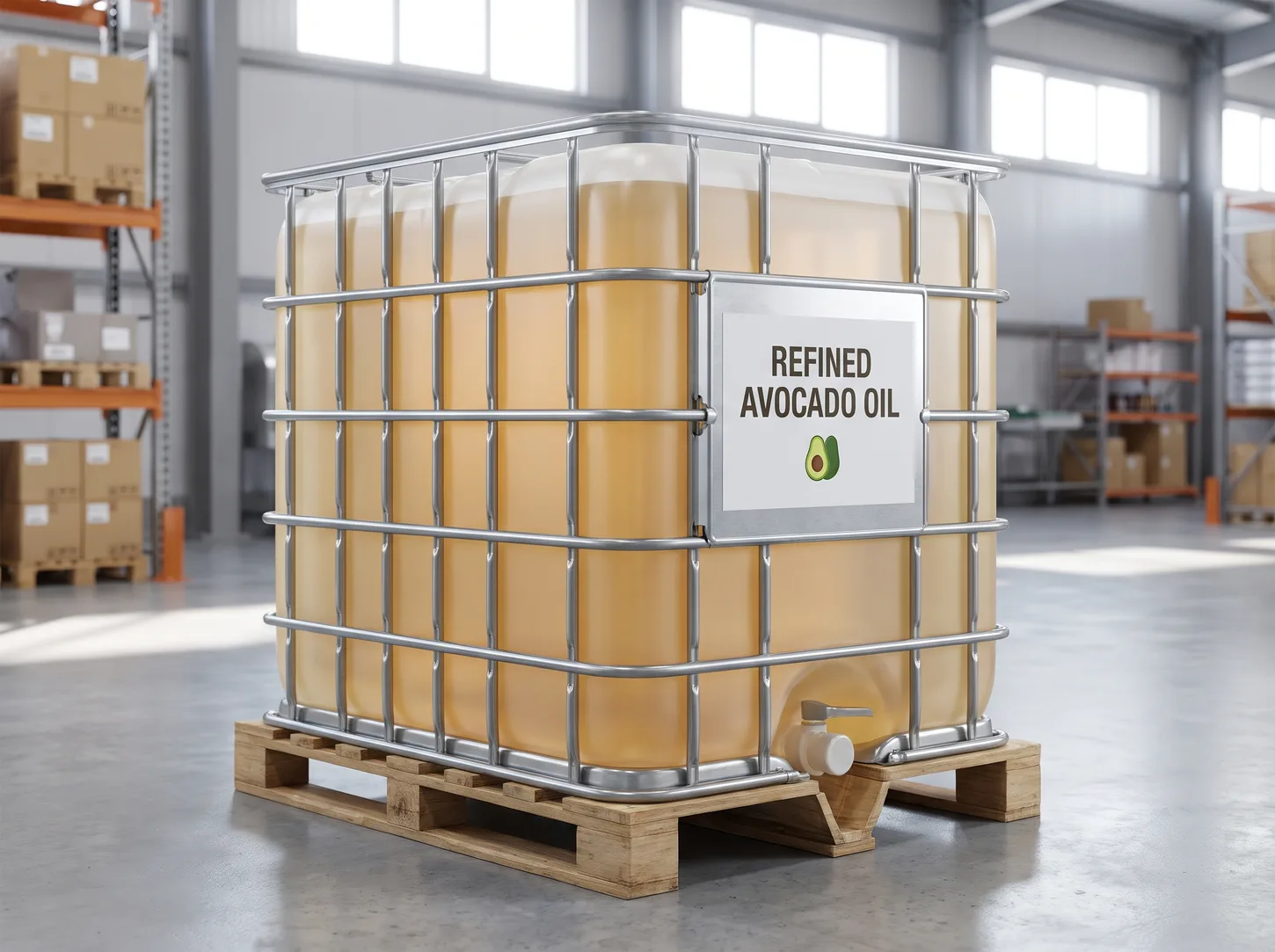
- Refined oil: consider refined avocado oil when a refined ingredient is specified. Imara has its own RBD refinery; assess a sample against your colour, odour and formulation requirements.
- Extra virgin oil: choose extra virgin avocado oil where an unrefined ingredient is part of the product concept. Confirm that its characteristics work in the finished formula.
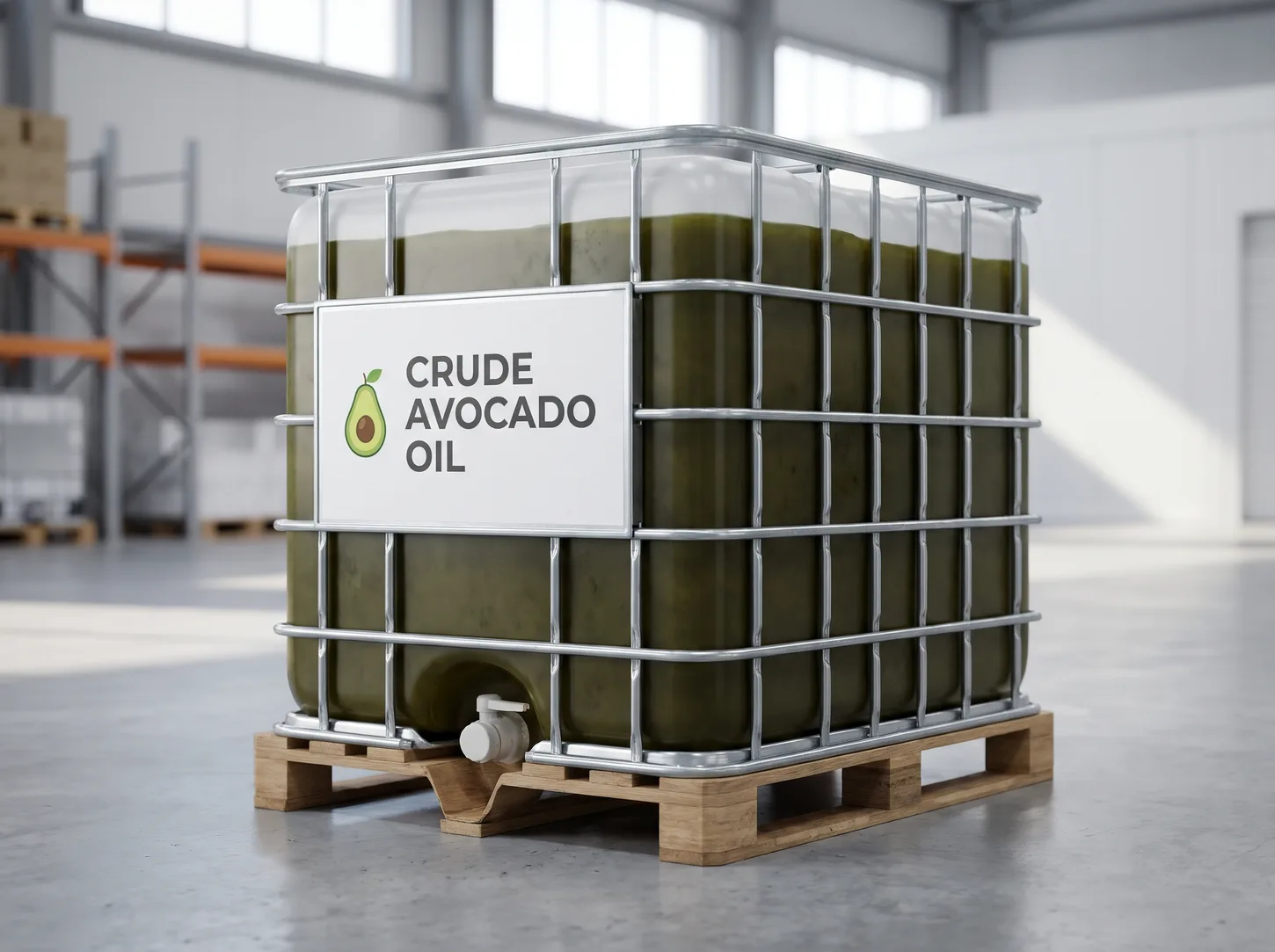
- Crude oil: crude avocado oil is relevant to buyers planning further processing. Do not assume a crude feedstock meets a finished cosmetic ingredient brief without technical assessment.
Imara also offers toll refining, with a minimum intake of 23 tonnes of crude oil. This is a separate buying decision from purchasing refined stock: confirm the input requirements and intended output specification before committing material.
Typical composition and physical properties
The following values describe a typical avocado oil profile. They are useful for preliminary comparison, but they are not a substitute for agreed acceptance criteria or the certificate of analysis for the supplied lot. Fatty-acid ranges should not be added together as though they represent one measured batch.
| Parameter | Typical value |
|---|---|
| Oleic acid | 60–75% |
| Palmitic acid | 10–20% |
| Linoleic acid | 8–14% |
| Palmitoleic acid | 2–8% |
| Linolenic acid | ≤2% |
| Stearic acid | ≤1% |
| Iodine value | 85–95 |
| Saponification value | 177–198 mg KOH/g |
| Density at 20°C | 0.910–0.920 |
Use this table to frame technical questions rather than to approve a delivery. If a particular parameter is critical to your process, identify it in the buying specification and confirm how it will be documented.
For example, a typical saponification range can inform early formulation work, but a production calculation should follow the material data and controls accepted by your technical team. Density is temperature-specific; retain the stated temperature when comparing supplier documents.
Reading FFA limits and lot documentation
Free fatty acid limits differ by grade. Imara’s crude Hass avocado oil has an FFA limit of ≤5.0%, refined oil ≤0.1%, and extra virgin oil ≤0.8%. These distinctions help buyers avoid treating all avocado oils as interchangeable.
FFA is only one part of an ingredient specification. Meeting that limit does not, on its own, establish suitability for a particular cosmetic formula or support a finished-product claim.
Imara provides a certificate of analysis for every lot, and the COA at loading prevails. A retained reference sample is kept, buyer inspection is welcome, and accredited contaminant laboratory tests are available on request. Raise any testing requirements during the enquiry so they can be considered before the order is agreed.
Evaluating oil in a cosmetic formula
A supplier specification is a starting point, not a finished formulation assessment. Evaluate the selected grade in the actual product format, whether that is a facial oil, balm, emulsion or hair oil.
Compare samples for the characteristics that matter to your brief: odour, colour, skin feel, compatibility with the other ingredients and the behaviour of the finished product in its intended packaging. A change of grade should prompt a fresh assessment rather than an automatic substitution based on the shared INCI name.
A 250 ml sample is available for preliminary evaluation. Agree the scope of any further testing with your technical team; a small sample cannot establish every requirement for commercial production.
For skin or hair use, seek advice from a qualified cosmetic formulator or relevant healthcare professional about product suitability and individual sensitivities. Avoid turning ingredient composition into unsupported promises about the finished product.
Storage and pack selection
Protect avocado oil from light, air and heat. Imara’s crude oil storage guidance is 15–25°C. For other grades, confirm the applicable handling guidance with the product documentation rather than automatically applying the crude storage range.
The sealed product shelf life is 24 months. This should not be treated as an automatic shelf-life claim for an opened container or a cosmetic formula containing the oil.
Bulk packaging options include 1,000 L IBCs, 200 L drums, flexitanks and ISO tank containers. A flexitank holds approximately 23 tonnes in a 20 ft container; the bulk minimum is one flexitank, approximately 23 tonnes. Confirm which pack arrangement is available for the proposed order. Choose with storage space, handling equipment and expected consumption in mind.
Private label and supply planning
For finished ranges, private-label avocado oil options include glass and spray formats in 250 ml, 500 ml and 1 L sizes, with a minimum of 100 bottles per SKU. Confirm the available size and format combination for your brief, particularly when a spray presentation is required.
Imara’s own bottles have a minimum order of five pieces. These smaller purchases and private-label orders serve different needs from bulk ingredient procurement.
Compare the wider product range before selecting an ordering route. For bulk enquiries, the wholesale page provides a relevant starting point. Supply terms include EXW Thika and FOB Mombasa, with CFR or CIF available on request. Imara uses ISO tank containers via Mombasa; these are transport equipment, not a certification claim.
What to include in your enquiry
State the required grade, intended use, quantity, packaging and delivery basis. Add any acceptance limits or documents needed for technical approval. Imara’s sourcing information is relevant where origin matters: incoming fruit is recorded by farm at the gate weighbridge, and supply includes Hass and other varieties.
Organic certification is in progress. Do not base an organic label claim on a pending certification.
To discuss a sample, specification or supply requirement, Email us.
Explore all avocado oil products · Crude avocado oil · Refined avocado oil.
Frequently asked questions
Does Persea Gratissima Oil mean refined avocado oil?
No. The INCI name identifies avocado oil, not its processing grade. Specify refined, extra virgin or crude separately when requesting a sample or placing an order.
Are the typical values guaranteed for every lot?
No. Typical values support comparison and preliminary assessment. Confirm your acceptance criteria with Imara and refer to the certificate of analysis at loading for the supplied lot.
Can I request contaminant testing?
Yes. Accredited contaminant laboratory tests are available on request. State the required tests during your enquiry so the documentation requirements can be discussed before ordering.
Is a private-label spray format available?
Spray formats are included in Imara’s private-label offering. Confirm the size and format combination for your product brief; the minimum is 100 bottles per SKU.