Yes, you can deep fry with avocado oil. Refined avocado oil is the usual choice because its taste is neutral, and the frying steps are the same as with any cooking oil: don't overcrowd the pot, keep water out of the hot oil, never leave it unattended, and let it cool fully before you strain and store it.
If you have asked "can you deep fry with avocado oil?", you probably want two answers: does the oil hold up in a fryer, and how do you do it safely at home? This guide covers both, using published research and food-safety guidance from the US Department of Agriculture (USDA).
Can you deep fry with avocado oil? What the research says
Deep frying is hard on any oil. Heat, air and water from the food slowly break the oil down, forming what scientists call "polar compounds" and polymers. Food scientists measure these to judge when frying oil should be thrown away.
A 2024 review of frying oils in the journal Foods explains that oils rich in monounsaturated fats (MUFA) "are highly recommended for frying due to their high oxidative stability", while polyunsaturated fats are "especially prone to oxidation". Avocado oil is mainly monounsaturated: in a 2024 frying study in Grasas y Aceites, oleic acid (a monounsaturated fat) made up roughly 63–68% of the avocado oils tested.
That same study is one of the first to test avocado oil in a real fryer. The researchers fried batches of potato sticks again and again in three avocado oils (virgin, minimally refined and refined) and compared them with virgin olive oil, sunflower oil and high-oleic sunflower oil. Their findings:
- After nine frying sessions, the virgin avocado oil, the minimally refined avocado oil, virgin olive oil and high-oleic sunflower oil were all below 20% polar compounds.
- The virgin avocado oil performed especially well, "even better than" the virgin olive oil, which the authors attribute to its higher natural tocopherol (vitamin E) content.
- The fully refined avocado oil sample held up less well, finishing only slightly ahead of ordinary sunflower oil.
The authors note that the avocado oils had very similar fat profiles, yet behaved differently in the fryer. So processing and natural antioxidants matter, not just the fat profile. It is one study, frying one food (potato) under one set of conditions, so treat it as a useful guide rather than a final word. The practical lesson: whichever avocado oil you use, watch the oil and change it when it shows signs of wear (see the checklist below).
Which avocado oil should you use for deep frying?
| Grade | Taste and colour | Good for |
|---|---|---|
| Refined | Neutral taste, pale colour | Chips, fritters, mandazi and anything where you want the food's own flavour to lead |
| Extra virgin | Mild, grassy, often green | Lighter pan frying and finishing, where a little avocado flavour is welcome |
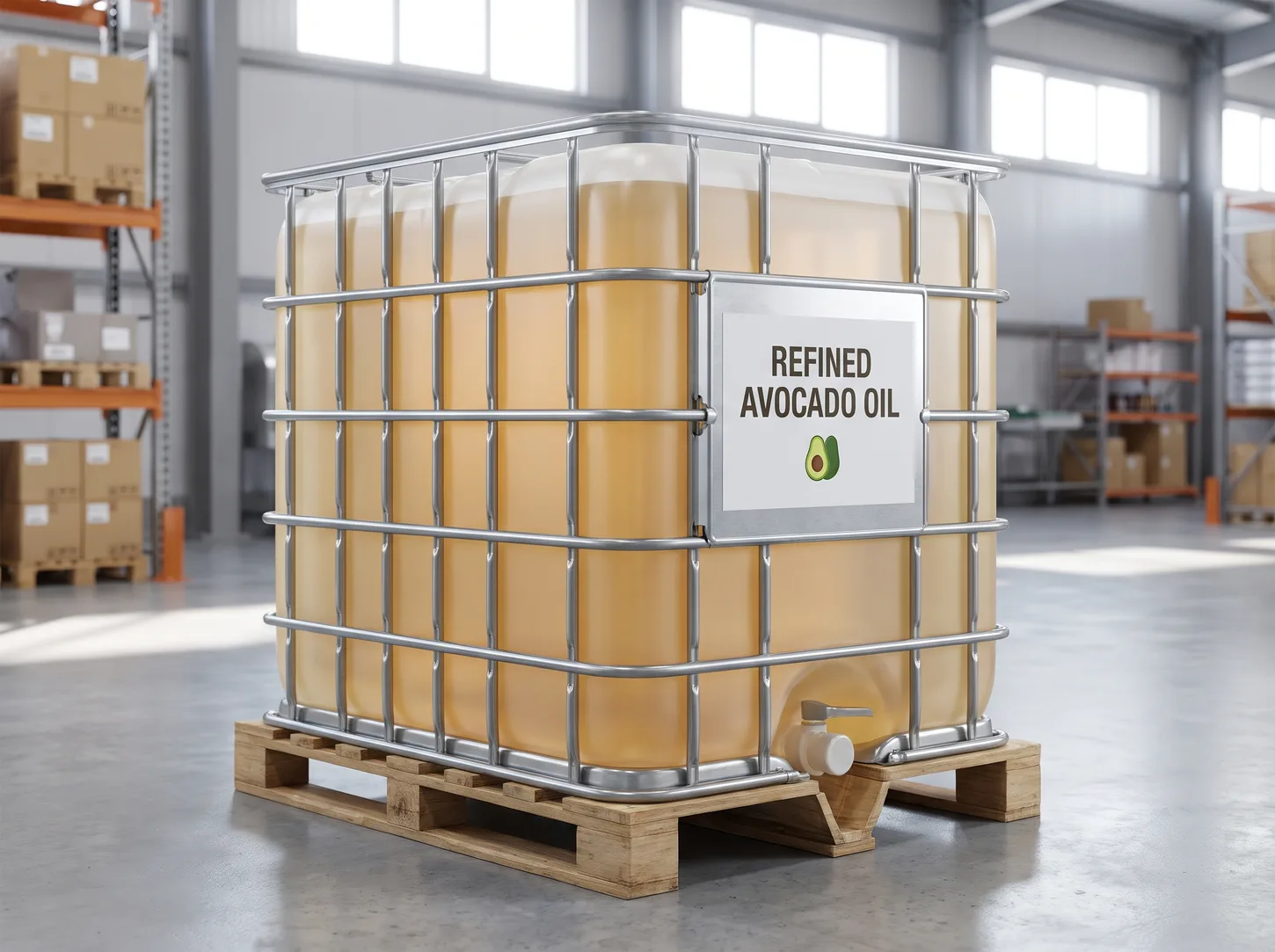
For most deep frying, refined avocado oil is the practical pick: it doesn't add flavour or colour to the food. Extra virgin avocado oil is usually kept for dishes where you want its taste. Our guide to avocado oil for cooking explains when to use each grade, and you can read more about our refined avocado oil.
How to deep fry with avocado oil safely
The USDA Food Safety and Inspection Service (FSIS) publishes clear advice for deep fat frying at home. Here are the key points.
Before you start
- Choose the right tools. FSIS warns never to use plastic when deep frying, because some plastic can melt in hot oil. It also advises avoiding cast iron, which "breaks down oil faster than other metals".
- Keep water away. FSIS says: "Do not let water get into the hot fat." Water and hot oil spit and splatter, so pat wet food dry before it goes in.
- Don't overfill or overcrowd. Overcrowding "can cause undercooking, uneven cooking, and overflowing of the oil", according to FSIS. Fry in small batches.
While you fry
- Never leave hot oil unattended.
- Check meat, poultry and fish with a clean food thermometer once you have lifted them out. FSIS advises not to test food while it is still in the hot oil.
- Refrigerate leftovers within two hours of frying.
If the oil catches fire
FSIS is clear: "never use water to put out the fire." Covering the pot with a metal lid or using a kitchen fire extinguisher is the best way to put out a grease fire. Call your local emergency number straight away.
After frying: cool, strain, store
- Turn off the heat and let the oil cool completely before you move or clean anything.
- Strain the cooled oil through a cheesecloth or sieve to remove crumbs.
- Store used oil in a sealed, light-proof container for up to three months. For best quality, keep oil you plan to fry with again in the fridge.
- Never pour oil down the sink.
When to throw your frying oil away
Oil does not last forever, whatever the type. FSIS says to discard frying oil if it:
- looks cloudy,
- starts to foam,
- has a foul smell or off taste.
If you see any of these, start again with fresh oil. If your bottled avocado oil looks hazy straight from a cold cupboard or fridge, that is a different matter: see our guide on why avocado oil goes cloudy.
How Imara can help
We are Imara Avocado Factory in Thika, Kenya. We make crude, refined, extra virgin and organic avocado oil, and we refine our oil ourselves, in our own refinery in Thika.
- For food brands: we bottle our oil under your brand in 250 ml, 500 ml and 1 L, as a bottle or spray, from 100 bottles per SKU.
- For bulk buyers: we supply from one container (23 t, one flexitank).
- For shops: our Imara brand is available from 5 pieces.
See our wholesale options or contact our team. Email us at support@imaraavocados.com.
FAQ
Can you deep fry with avocado oil at home?
Yes. Follow normal deep-frying safety: a fryer or a deep, heavy skillet (not cast iron, and no plastic tools), small batches, no water near the oil, and never leave it unattended.
Is refined or extra virgin avocado oil better for deep frying?
Refined avocado oil is the usual choice because its taste is neutral. In one 2024 study a virgin avocado oil held up especially well in the fryer, so the best guide is to watch your oil and change it when it shows signs of wear.
Can I reuse avocado oil after deep frying?
Yes, if it is still in good condition. Let it cool, strain it, and store it sealed and away from light for up to three months; the fridge keeps it best. Throw it away if it foams, smells bad or tastes off.
What should I do if frying oil catches fire?
Never use water. Cover the pot with a metal lid or use a kitchen fire extinguisher, and call your local emergency number.
Sources
- USDA Food Safety and Inspection Service. "Deep Fat Frying and Food Safety." Last updated 9 August 2024. https://www.fsis.usda.gov/food-safety/safe-food-handling-and-preparation/food-safety-basics/deep-fat-frying
- Holgado F, Martínez-Ávila M, Ruiz-Méndez MV, Márquez-Ruiz G. "Performance of virgin and refined avocado oils during deep-frying and thermoxidation simulating frying in comparison with olive and sunflower oils." Grasas y Aceites 75(2), 2024. https://doi.org/10.3989/gya.0319241.2144
- Abrante-Pascual S, Nieva-Echevarría B, Goicoechea-Oses E. "Vegetable Oils and Their Use for Frying: A Review of Their Compositional Differences and Degradation." Foods 13(24):4186, 2024. https://pmc.ncbi.nlm.nih.gov/articles/PMC11675685/
Explore all avocado oil products · Crude avocado oil · Refined avocado oil.